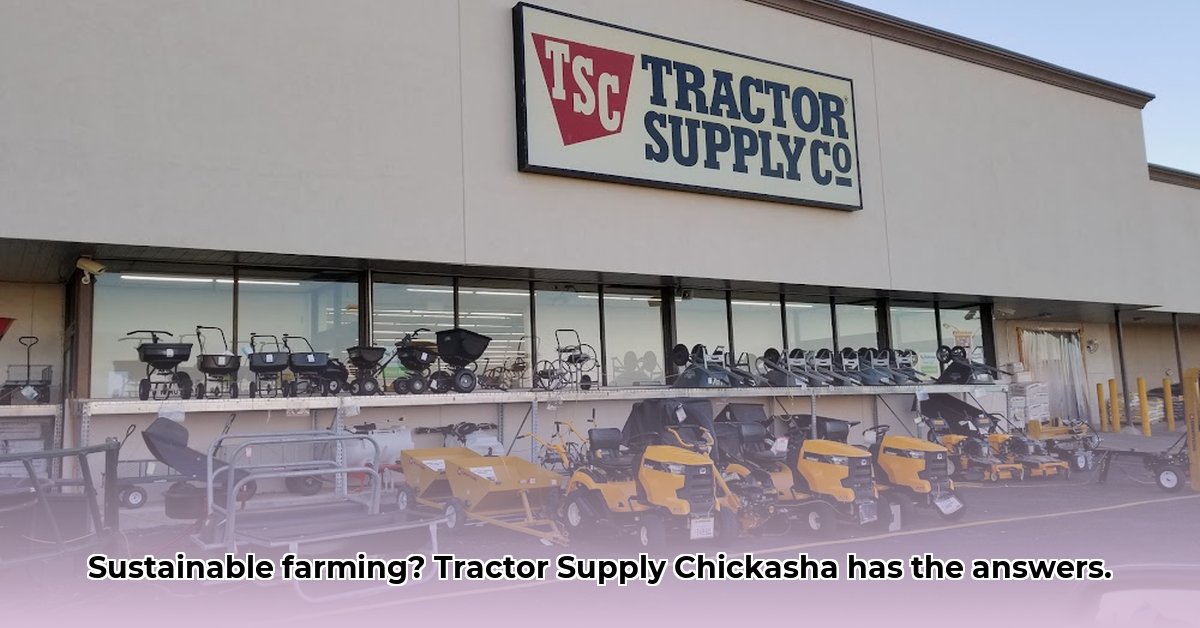
Tractor Supply Company (TSC) in Chickasha, Oklahoma, plays a significant role in the local agricultural landscape, serving as a vital resource for farmers and gardeners alike. This article explores TSC's contribution to sustainable agriculture in Chickasha, examining both its positive impacts and the critical data gaps that hinder a complete assessment. Does easy access to supplies translate to widespread adoption of sustainable practices? And how sustainable is Tractor Supply's own operation? For more information on this specific location, visit the Chickasha TSC page.
Access to Essential Resources: A Double-Edged Sword
TSC's Chickasha location offers a wide range of agricultural supplies, including seeds, fertilizers, fencing materials, and livestock feed. This readily available inventory reduces the reliance on more distant distributors, potentially lowering transportation emissions and bolstering the local economy. However, this convenience presents a double-edged sword. The sustainability of these supplies themselves remains largely unverified. Are the fertilizers organically sourced? Are the seeds non-GMO? Without detailed information on the supply chain, it's difficult to definitively assess the environmental impact of these products.
Does easy access to these resources automatically lead to sustainable farming practices? This question remains central to evaluating Tractor Supply's impact on Chickasha's agricultural sustainability. Further research is needed. One might ask, what percentage of TSC Chickasha customers report using sustainable farming methods?
Empowering Small-Scale Farmers: A Positive Impact
TSC's influence is particularly pronounced amongst smaller farmers and home gardeners who benefit substantially from the convenience and diverse product selection. This accessibility empowers them to implement sustainable methods like water conservation and reduced pesticide use. But the extent of this positive impact is uncertain without quantitative data illustrating the adoption of sustainable practices among TSC customers in Chickasha. How many local farmers have transitioned to organic farming, for instance, as a direct result of TSC's presence?
"The accessibility of TSC's products is undeniably beneficial," says Dr. Emily Carter, Professor of Agricultural Economics at Oklahoma State University. "However, correlating this access with widespread adoption of sustainable farming practices requires rigorous research."
The Crucial Need for Data and Transparency
While TSC's contribution to local agriculture is evident, crucial information remains absent. The environmental cost of transporting products to the store, the sustainability certifications of the products themselves, and the overall environmental footprint of TSC's operations all require thorough investigation. Transparency is key; detailed information on product sourcing and production methods is needed to accurately gauge TSC's broader impact on the environment.
Is Tractor Supply committed to sustainable sourcing throughout their supply chain? What percentage of their products meet specific environmental standards? These data points are crucial to understanding their true sustainability.
Community Collaboration: The Path Forward
Strengthening TSC’s commitment to sustainability requires a multi-faceted approach. The company could collaborate with local organizations focused on sustainable agriculture, hosting workshops on water conservation or organic farming techniques. Moreover, community pressure, fuelled by consumer demand for transparency, can drive positive change. Local governments can also play a role through targeted incentives for sustainable farming practices and support for local farmers' markets.
"Consumer demand for transparency and sustainable practices is a powerful force," remarks Mr. John Miller, Director of the Chickasha Chamber of Commerce. "By actively choosing sustainable products, consumers can incentivize businesses like TSC to improve their practices."
A Call for Further Research and Collaboration
Tractor Supply Chickasha undoubtedly contributes positively to the local agricultural community, particularly for smaller-scale operations. However, a comprehensive assessment necessitates further research into its overall environmental impact. Understanding the true extent of its contribution to sustainable farming in Chickasha requires a meticulous investigation into its supply chain and the practices employed by its customers.
Three Pivotal Points:
- TSC's Chickasha store offers convenient access to essential agricultural supplies, potentially lowering transportation emissions.
- Assessing TSC's overall environmental impact requires a thorough examination of its supply chain sustainability.
- Transparency and collaboration between TSC, local organizations, and the community are vital for maximizing the positive impacts of the store.
A collaborative effort, encompassing TSC, local organizations, researchers, and the community, is paramount for developing sustainable agricultural practices in Chickasha. Only through transparency and further investigation can the full scope of TSC's impact on sustainable agriculture be adequately understood.
Unlocking Rural Bliss: Your Essential Toolkit for Country Living
Moving to the countryside offers a captivating promise of peace and self-sufficiency, but it’s crucial to understand that rural living demands a particular mindset and skill set. Forget instant gratification; embrace resourcefulness. You’ll quickly discover the value of basic DIY abilities, from mending a fence to understanding simple plumbing or electrical fixes, as calling a specialist might mean a longer wait and a steeper fee. Developing an acute awareness of your surroundings – local wildlife, weather patterns, and the rhythm of the seasons – becomes second nature, influencing everything from gardening schedules to travel plans. It’s about cultivating a deeper connection to your environment and fostering an independent spirit that thrives on practical problem-solving.
Beyond personal aptitude, a few tangible essentials are non-negotiable for a smooth transition. A reliable vehicle, ideally with four-wheel drive and good ground clearance, is paramount for navigating unpaved roads and adverse weather conditions, especially when amenities are miles away. Don’t underestimate the need for robust internet access; while the scenery is stunning, remote work or staying connected often hinges on satellite or fixed wireless solutions. Prepare for power outages with a sturdy generator or alternative energy source, and equip yourself with a decent set of tools – from garden implements to a chainsaw – for property maintenance. Lastly, building a well-stocked pantry and emergency kit is wise, ensuring comfort and safety when nature, or distance, throws a curveball.